Ask AI for a short summary of this article
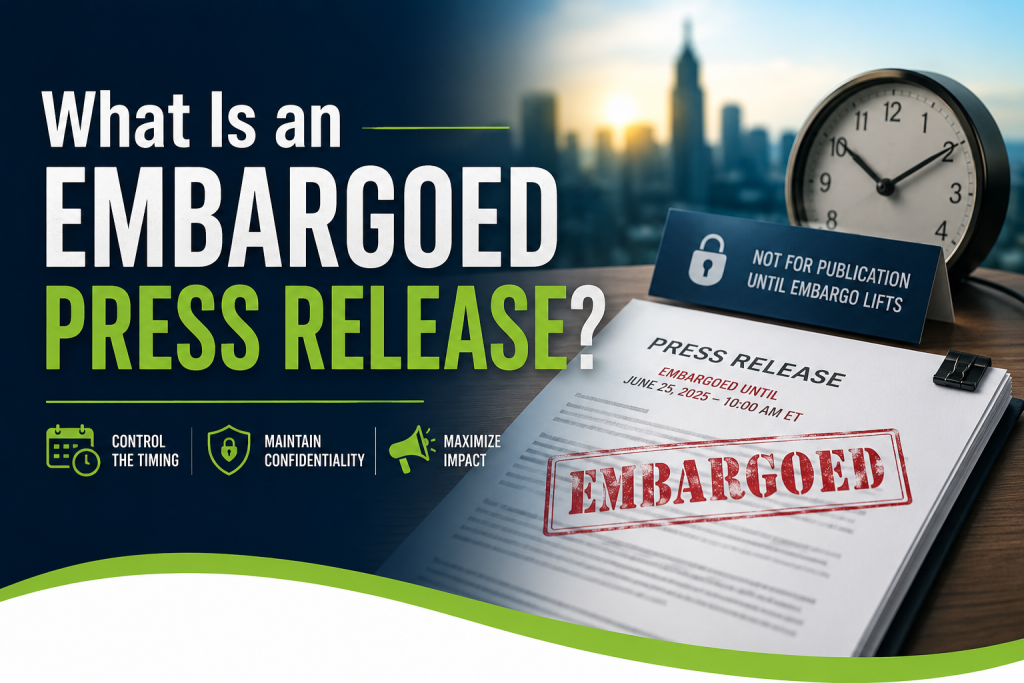
An embargoed press release is when you send your news to journalists days or even weeks before you want it published, with a clear “do not publish until” date and time stamped at the top.
Picture this: you’re launching a major product next Tuesday at 9 AM, but you send the press release to reporters the previous Friday. They can read it, research it, and even interview your executives over the weekend, but they agree not to hit “publish” until that Tuesday morning deadline. It’s like giving journalists a sneak peek behind the curtain while you maintain control over the big reveal.
Why would you want to do this? Simple – it gives journalists time to dig deeper, ask follow-up questions, and write more thoughtful coverage instead of rushing to be first. Plus, when everyone publishes at the same time, your story gets maximum impact rather than trickling out piecemeal. Whether you’re launching a new product or announcing big company news, embargoes help you get the coverage you actually want instead of leaving it to chance.
What Is an Embargoed Press Release?
Embargoed press releases are press releases that you send to media outlets before the official publication date. This can give journalists extra time to review the release, prepare their stories, and request additional information if needed.
Regular press releases are titled “for immediate release” and outlets can publish them anytime. By contrast, an embargoed press release says “not for immediate release” and includes a publication date.
How Is an Embargoed Press Release Used?
Embargoed press releases are most often used to announce big, time sensitive news. For a business, this could include a merger, new project, change in management, or research results. Generally, these announcements are somewhat time-constrained.
For example, you might want to use an embargoed press release in the acquisition of a publicly traded company. In this case, you legally cannot directly share details with the public until a certain time and need to do so carefully.
Announcements that are complex and need careful explanation are also ideal candidates for embargoed releases. This can allow the journalists you work with to gather enough information to create an accurate and thorough story.
When information is critical and can impact public safety, you may also want to use an embargoed release. Because of this, government officials usually use them to announce policy decisions and medical journals will use them for health announcements.
How to Embargo a Press Release
1. Determine the Embargo Date and Time:
Decide on the exact date and time when the media can publish the information. Ensure that this timing aligns with your organization’s strategic goals and any related events or announcements and, ideally, with key market and news cycle release times.
2. Clearly Mark the Embargo on Your Press Release:
At the top of your press release, clearly state (if possible, in red type) that the information is embargoed and include the exact date and time when the embargo is lifted. For example:
Embargoed Until: January 3, 2024 8:00am EST
Examples of Embargoed Press Releases
Here are some embargo examples so you can see how others have created their embargoes:
- New Improved Product Release
- Reaction to a new drug trial efficacy announcement
- Release of new advancements in cancer detection announcements (see embargoes in text of the announcement)
- New product limited supply release
- Press release embargoed until news conference
- Generative AI announcement
- A press release announcing the embargo of new census data
- Scientific paper data embargo
- Embargo release at 00:01 – one minute after midnight
- Information communicated on call to be embargoed until…
Benefits of Putting Your Press Release Under Embargo
Embargoed press releases can be a valuable tool for getting your story out. If you take full advantage of a press embargo, you can release valuable information exactly when you need to.
Media Embargoed Press Releases Give the Media a Chance to Create a Better Story, Improving Your Message
An embargoed press release sent out several days before the embargo release date allows journalists additional research and writing time. This can help ensure your journalist writes a good story that is accurate and contains all the necessary details, which oftentimes means a better story.
Having this extra time can also give you a bit more control over exactly what is released. If you need to approve any information or provide additional details, you will have time to do so.
Press Embargoed Press Releases Allow Synchronized Release Across Multiple Media Sources
In addition, it can help synchronize publicity. Doing so can be critical if you need the story to break at a specific time. For instance, you might want to use one in sharing information about a joint venture or merger in order to keep your competition in the dark regarding the news.
Disadvantages of Media Embargoed Press Releases
While embargoed press releases are highly valuable if used correctly, they sometimes have some downsides.
Early Releases – Media Embargo Dates Are Sometimes Violated
Media outlets are prohibited from releasing the information contained in the press release before the publication date. The information is considered confidential. Unfortunately, leaks happen and there have been more than a few cases where journalists released information before the publication date.
This means releasing an embargoed press release could be risky.
That’s why an embargo should be used carefully, not automatically. Before sending one, make sure you understand the practical risks of using an embargoed press release, including leaks, timing confusion, and damaged media relationships.
A journalist might get excited and push the story through for early release. This sometimes happens because the outlet wants to be the one to break the story. Other times, a journalist might claim that they didn’t see the publication date.
Either way, an early release could put a strain on your relationship with media outlets. In order to avoid these kinds of issues, never send an embargoed press release to a media outlet that has a reputation for early releases. In addition, always try to build a relationship with the outlet before providing them with valuable information.
Press Embargoes Are Disliked by Some Journalists
In addition, many journalists do not like embargoed releases. Some public relations managers send an embargoed release to every media outlet that reports on their industry. This can be a downside to journalists who want to be the one to break the story.
If everyone is only able to release the information at once, it’s really only valuable until the first outlet has released the story. After that, there is less of an incentive to publish a story that has already been covered, particularly if they don’t have additional information to add.
Embargoed Press Releases Are Harder to Work With
While embargoed news is important to you, it can be difficult to work with for journalists. Journalists receive up to 100 pitches a day, and they need to make sure the stories they cover are relevant and interesting to their audience.
For example, journalists may not find a speaker at an event quite as fascinating as you, making the embargo an annoying barrier to coverage. Another common roadblock is embargoes that are set too long. Unfortunately, ones longer than a week may be forgotten about and not covered as a result.
How to Send an Embargoed Press Release
Correctly managing and sending your press release can mitigate many of the concerns that come along with embargoed releases. These are the top tips to avoid an embargoed PR controversy.
If you are putting an embargo on a press release distributed through eReleases, simply let us know and we’ll be sure to implement that embargo for your release.
Be Wary About Time Constraints
You’ll need to manage your timing correctly when working with an embargoed release. Aim to send your release out at least two to five days before you want it announced. This will allow journalists enough time to build their stories.
However, you also shouldn’t send it out too early as this gives more opportunity for leaks. Generally, your release should go out no more than one week before the official announcement.
When sending your release, it’s best to reach out first, using a sneak peek of the announcement. Then, make sure to get a written agreement to the embargo before sending over the entire release. These steps are optional but can help to build trust between you and the outlet.
Include an Embargo Release Time and Time Zone on the Embargo Notification Line
Many PR professionals have had the frustrating experience of finding their carefully crafted communications strategy timing disrupted because they didn’t include a time or time zone in their embargo date announcement.
Imagine the embarrassment of having your story released at 12:01am when you thought it was happening at 8:00am. There’s an easy way to fix that…
Selective Embargoed Releases vs. News Exclusivity
You should be selective in who you send embargoed releases to. Only sending them to trusted outlets will reduce the likelihood of a leak. In general, it’s best to stick to about five reputable media outlets for an embargoed press release.
Alternatively, you could consider news exclusivity. This approach can help you get more attention or manage news that is particularly sensitive.
With this approach, offer the release to only one organization at a time. You’ll be able to have more control over the story and who gets to speak on it. In addition, you can gain more media credibility.
Create a Leak Management Plan
What happens if your story is accidentally (or purposefully) leaked before the embargo ends? Likely, other media outlets will quickly also cover the story in order to get ahead of it. You need a way to deal with what will happen if this occurs.
For some organizations, this might mean early action. For instance, if you were releasing information about a product launch, you might want to consider moving the official launch day forward. This will also require getting your team prepared to act quickly.
It’s also in good form to provide the media outlets that stuck to the agreement with additional information. You might want to send exclusive images or videos, statistics, or even access to expert or executive interviews. This can help them create better content as a reward for adhering to your request.
In addition, you should send a press release to all other media outlets informing them of the early release. This can help maintain your relationships with the other outlets. Otherwise, they may think there was unfairness in that they were told to wait while the outlet that released early was allowed to do so.
Use a Press Release Distribution Service
A press release distribution service can make it much easier to send out and manage press releases, whether they are embargoed or regular. They can send your press releases to major media outlets as well as subscribing journalists. This can help ensure you reach outlets that are trustworthy and will cover your story.
At eReleases, you can even target specific outlets by industry, putting your story in front of outlets with audiences that have more interest in your news. Plus, we use search engine optimization to help your story be found on major search engines, without using deceptive practices.
Frequently Asked Questions (FAQs) About Embargoed Press Releases
What happens if a journalist breaks an embargo?
Breaking an embargo can seriously damage a journalist’s professional reputation and relationship with PR professionals. Most reputable journalists take embargoes very seriously because their credibility depends on honoring agreements. If a journalist breaks an embargo, they may be excluded from future embargoed information from that organization and potentially face consequences within their newsroom. However, there are no legal penalties for breaking an embargo since it’s an agreement based on professional courtesy rather than a binding contract.
How far in advance should I send an embargoed press release?
The timing depends on the complexity of your story and your goals. For breaking news or simple announcements, 24-48 hours is typically sufficient. For more complex stories that require research or interviews, consider 3-7 days. Major industry announcements might warrant 1-2 weeks of advance notice. Always consider journalists’ deadlines and publication schedules when setting your embargo time.
Can I send the same embargoed press release to multiple different media outlets?
Yes, it’s common and often expected to send embargoed releases to multiple outlets, including competitors. Most journalists prefer knowing they’re not the only ones receiving the information, as it sets clear expectations about exclusivity. The embargo ensures all recipients can publish simultaneously, creating fair competition based on the quality of their coverage rather than timing advantages.
What should I do if I need to update information in an embargoed release?
Send updates immediately to all recipients who received the original embargoed release. Clearly mark the updated version with “UPDATED EMBARGOED PRESS RELEASE” in the subject line and highlight what has changed. If the changes are significant, consider calling key journalists directly. Never assume journalists will see minor updates in their email, especially close to the embargo lift time.
Are embargoes legally binding?
No, embargoes are not legally enforceable contracts. They operate on a foundation of professional trust and courtesy within the media industry. While you cannot sue a journalist for breaking an embargo, the professional consequences and damage to relationships usually provide a sufficient deterrent. The system works because it benefits both parties when respected.
Should I follow up before the embargo lifts?
A gentle reminder 24 hours before the embargo lifts can be helpful, especially for complex stories or when you’ve provided additional resources. However, avoid excessive follow-ups that might annoy journalists. If you haven’t heard from key targets, one polite check-in is usually acceptable, but respect their professional judgment about whether the story merits coverage.
What if different time zones complicate my embargo?
Always specify the time zone in your embargo notice (e.g., “EMBARGOED UNTIL 9:00 AM EST, JANUARY 15, 2025”). Consider your target audience’s locations when setting the time. If you’re targeting national or international media, Eastern Time is commonly used in the U.S., while GMT/UTC works for global releases. Some organizations set multiple embargo times for different regions.
How do I handle offers of exclusive interviews alongside an embargoed release?
You can offer exclusive interviews to select journalists while still sending the basic embargoed release to a broader list. Make it clear that the interview is exclusive, but the basic information will be available to all recipients at the embargo time. This approach can generate more in-depth coverage while maintaining fairness for the broader media list.
Should I include “EMBARGOED” in the email subject line if I am embargoing a press release?
Yes, always include “EMBARGOED” prominently in the subject line along with the lift date and time. For example: “EMBARGOED UNTIL 9 AM EST JAN 15, 2026: Company XYZ Announces Major Partnership.” This immediate visibility helps journalists manage their workflow and prevents accidental early publication.
What types of stories work best with embargoes?
Embargoes work well for scheduled announcements (product launches, earnings, research findings), complex stories requiring time for journalist research, coordinated announcements across multiple time zones, and situations where you want to ensure fair access for all media outlets. They’re less effective for breaking news, crisis communications, or stories that lose relevance quickly.
Can I lift an embargo early?
While possible, lifting an embargo early should be done only in exceptional circumstances and requires immediate notification of all recipients. Early lifting might confuse journalists and could be seen as unprofessional. If you must lift early, clearly explain the reason and give journalists time to adjust their publication plans accordingly.
Take Advantage of Embargoed Press Releases
An embargoed press release can be a valuable tool to get your news out exactly when and how you want it. But, you need to be careful to avoid common stumbling blocks while doing so.
Sending your press release the right way and using a press release distribution service can make the process much easier. Get started with eReleases today!

Mickie Kennedy founded eReleases.com in 1998 after watching PR firms charge small businesses a $20,000 minimum for a single press release. For 27 years, he’s been closing that gap — distributing 150,000+ releases via Cision PR Newswire, serving 30,000+ clients including Manscaped, Squatty Potty, and 40+ Shark Tank brands, and generating $132M+ in earned media. A sought-after podcast guest and two-time Amazon bestselling author of Beginner’s Guide to Writing Powerful Press Releases and The PR Strategy Manifesto. Mickie holds an MFA in Creative Writing from George Mason University. Based in Baltimore, MD. LinkedIn