Press Release Headlines
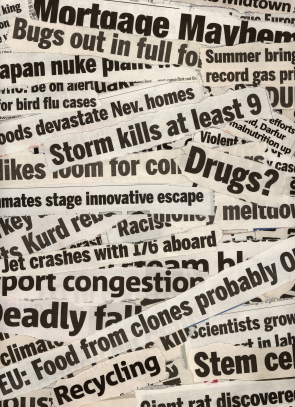 Without a headline that demands attention, your press release will never have a chance of getting serious exposure. It doesn’t matter if your press release is being sent to editors at the top industry news outlets or if you’re publishing it online yourself, everyone – from editors to your customers – is in a hurry. Their decision as to whether or not to read your press release depends on whether they find your headline interesting.
So, what can you do to write press release headlines that suck readers in? Here are some tips for better headline writing.
1. Lead with Numbers and Data in Your Headline
Numbers transform vague statements into concrete, credible stories that journalists can immediately grasp. In fact, 61% of journalists rank original research and market data as their most-wanted content from PR teams.
Weak: “Company Sales Increase in Third Quarter”
Strong: “Third Quarter Sales Up 60% as Remote Work Drives Demand”
The number “60%” immediately signals the magnitude of the story. Journalists can quickly assess whether this fits their publication’s standards for significant business news.
Action tip: If you have percentages, dollar amounts, or survey results, put the most compelling number in your headline. Round to clean numbers when possible (60% not 59.7%).
2. Great Press Release Headlines Use Active Voice with Strong Verbs
Action words like “reveal” and “unveil” tend to drive more engagement because they signal something new and interesting. Active voice creates immediacy and energy that passive constructions lack.
Weak: “New Software Features Were Announced by TechCorp”
Strong: “TechCorp Unveils AI-Powered Analytics Platform”
The active voice version is shorter, more direct, and uses “unveils” to suggest innovation. In headline writing, events that occurred in the past are written in the present tense because they are considered news.
Action tip: Replace weak verbs like “announced” or “launched” with stronger alternatives like “unveils,” “reveals,” or “debuts.” Avoid passive voice entirely.
3. Keep Your Headline Short, Under 70 Characters
The experts at eReleases found that headlines between 51-75 characters tend to get the highest engagement. This isn’t arbitrary—it’s based on how headlines display in search results and social media feeds.
Too Long (89 characters): “Local Restaurant Chain Expands Operations with Five New Locations Across the Metropolitan Area”
Just Right (68 characters): “Restaurant Chain Opens Five Locations Across Metro Area”
Since SEO is important for your press release, consider that Google cuts off a page title after 70 characters.
Action tip: Write your headline, then count characters (not words). Most text editors show character counts or use a simple online counter.
4. Skip Your Company Name (Usually) in the Headline
Unless you’re a household name like Apple or Google, your company name probably doesn’t need to be in the headline. Journalists often care more about what’s happening than who’s making it happen.
Company-Focused: “DataTech Solutions Launches New Customer Analytics Platform”
News-Focused: “New Analytics Platform Cuts Customer Churn by 40%”
The second version leads with the benefit (a 40% reduction in churn) rather than the company name. Your brand gets mentioned in the body copy and contact information.
Exception: Include your name when partnering with a recognizable brand or when your company name adds credibility to the story.
5. Answer “Why Should I Care?” in Your Headline Immediately
Your headline has to speak to journalists by showing them why your announcement is worth their time and why their readers will benefit. Don’t make them guess the news value.
Vague: “Local Startup Receives Investment Funding”
Clear Value: “EdTech Startup’s $2M Funding Targets Teacher Shortage Crisis”
The improved version immediately explains the problem being solved (teacher shortage) and the scale of the solution ($2M funding).
Action tip: Before writing, complete this sentence: “This matters because it ___.” That “because” statement should appear in your headline.
Here are some additional tips to increase the effectiveness of your headlines:
6. The Clarity of Your Headline Is Key
Whenever an editor or anyone else reads your headline, they should instantly know exactly what the rest of your press release is about. Never mislead readers by promising something in your headline that you don’t deliver on in the story. And while you’re at it, eliminate technical jargon that will likely go over the heads of most readers.
Here’s a tip: Show someone who doesn’t work at your company just the headline of your press release, and ask them to describe what they think the story is about. If they’re unable to do this, it’s probably time to rewrite your headline.
7. Stop Trying to Be Clever
There is a very thin line between an effectively-clever headline and an overly-clever headline. If your headline is too clever or cutesy, it could instantly turn off readers. When you try to be too clever, you also risk losing the clarity of your headline. If in doubt, tone it down a little bit.
8. Beware of Sounding Gimmicky
Sure, the ultimate goal of a press release is to get your name out there, but that doesn’t mean you should treat it as an advertisement. If your headline is “New Miracle Product by ABC Company will Change Your Life Forever and Solve All Your Problems!!!”, you’re way too over the top. Eliminate the hype, and ditch any words that sound salesy or gimmicky.
9. Always Proofread Before Sending
It seems like common sense, but you’d be surprised how many companies send out press releases with typos or other errors in the headline. Here’s a tip: Set your press release aside for 24 hours (if you have the time) before trying to proofread it. This allows you to come at it with a fresh set of eyes, making it much easier to spot mistakes. If you don’t have the time, have someone else, who wasn’t involved with the writing of the release, add an extra layer of proofreading before sending it out.
Quick Press Release Headline Transformation Examples
Before: “ABC Manufacturing Company Announces New Hire”
After: “Former Tesla Engineer Joins ABC as Chief Innovation Officer”
Before: “Software Update Released by Mobile App Developer”
After: “App Update Reduces Battery Drain by 35%”
Before: “Local Business Wins Industry Recognition”
After: “Family Restaurant Named Top Sustainable Business in State”
Your 30-Second Press Release Headline Checklist
Before sending your press release, verify:
-
✓ Character count under 70
✓ Includes specific numbers or data
✓ Uses active voice and strong verbs
✓ Answers “why this matters now”
✓ Avoids company name unless necessary
✓ Would make sense to someone outside your industry
Creating Powerful Press Release Headlines
A good press release headline will either make or break your entire press release. You could write the most comprehensive press release with stunning visuals, but none of that matters if journalists never read past a weak headline.
Start with these five rules, practice with real examples, and remember that your headline isn’t about your company—it’s about the story that will interest a journalist’s readers. When you nail that distinction, your press releases start getting the coverage they deserve.
The best headlines feel effortless to read but require careful thought to write. Spend the extra time perfecting yours. Your story depends on it.
What tips would you add to this list? Share your thoughts in the replies.
This article is written by Mickie Kennedy, founder of eReleases (https://www.ereleases.com), the online leader in affordable press release distribution. To subscribe to PR Fuel, visit: https://www.ereleases.com/prfuel/subscribe/.